

CLIO · CONTEXT LAYER FOR I/O
An open stack for AI-driven science.
IOWarp builds CLIO: open-source software that runs from CUDA kernels and the Linux I/O path, through storage and a context runtime, to scientific agents, applications, and research tools. In AI-driven science, context is part of the system.
TRY IT
Install one piece.
It works alone.
Start with the product closest to your work. Every route leads to its own documentation and source code.
Where the documentation livesGive scientific data an agent, from a terminal, a desktop app, or a browser.
curl -fsSL https://raw.githubusercontent.com/iowarp/clio-agent/v0.9.4.24/install/install.sh | bash Connect a model to a repository you can inspect.
curl -fsSL https://coder.iowarp.ai/install.sh | sh Choose scientific tools and workflow plugins for your client.
uv tool install clio-kitIOWarp and the CLIO platform soft launch at SC26 in Chicago, November 15–20, 2026. IOWarp at SC26 →
WHAT IS THIS?
One stack,
from GPU to agent.
IOWarp is an open-source project at the Gnosis Research Center. It builds CLIO, a software stack for AI-driven science.
An AI agent in science needs more than a model. It needs the right data with its meaning attached, memory that lasts beyond one session, and a way to run on anything from a laptop to a national system. CLIO covers each of those, from GPU kernels and storage up to agents and applications.
You do not need all of it. CLIO Agent, CLIO Coder, CLIO Kit, and CLIO Core each install on their own.
- 07Research tooling
Tools for writing, measuring, and testing research claims.
- 06Applications
Science workflows and domain packages built on the stack.
- 05Agents and tools
- 04Context runtime
- 03Storage systems
Tiered devices, I/O adapters, compression, and data connectors.
- 02Operating system
The Linux I/O path, from asynchronous I/O to kernel modules.
- 01Accelerators
GPU code that reaches the storage hierarchy directly.
THE SCIENCE
Built with
working scientists.
IOWarp works with scientific teams: materials scientists, the National Data Platform, and DOE Genesis Mission projects at Argonne and PNNL. CLIO Core runs on national research systems.
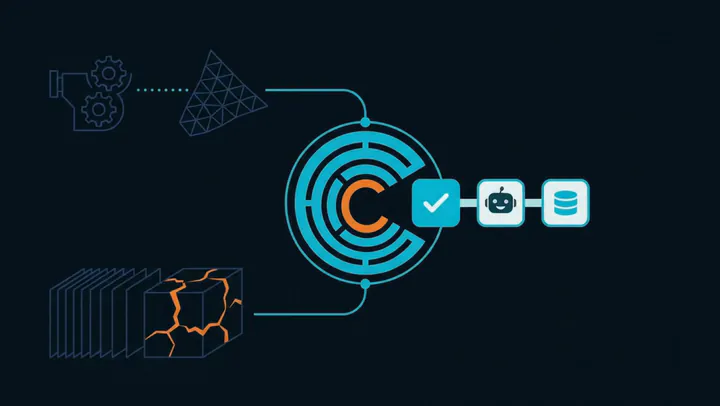
- A1Agents in the materials workflowMaterials scienceDesign on HPC, additive manufacturing, X-ray tomography, and fatigue testing: the Utah team’s reference workflow, and the agent tools built for it.
- A2Agents on the National Data PlatformData infrastructureMCP tools that let an agent search, stage, and analyze datasets federated through the National Data Platform, first shown on EarthScope data.
- A3Provenance and integrity for AI-driven scienceDOE Genesis · SPOTTER-AIA DOE Genesis Mission project at Argonne National Laboratory that traces integrity attacks on scientific AI workflows to their source. CLIO Agent provides the investigating agents.
- A4Agentic workflows across HPC and cloudDOE Genesis · PORTUSA DOE Genesis Mission project at PNNL on performance-aware agentic workflows for the Genesis Mission Platform. The IOWarp team works on workflow motifs and performance models.
- A5CLIO on national research systemsNational infrastructureWhere CLIO Core has been built and run: ALCF Aurora, DeltaAI, and the Ares cluster.
- A6GPU direct I/O and compressionAccelerated computingCUDA kernels that read and write IOWarp from the GPU, GPU payloads offloaded to host memory and NVMe, and compression on the device. A research thread built on NVIDIA technologies.
MEET US
Meet the team
at SC26.
IOWarp at SC26November 15–20, 2026 · McCormick Place, Chicago
IOWarp and the CLIO platform soft launch at SC26 in Chicago. The team presents work on simulation monitoring, GPU I/O, storage observability, compressed training data, and agent fleets through workshop presentations, research posters, a conference paper, and an HDF5 birds-of-a-feather session. The user group gathers around these events, and the Technical Advisory Board forms at the end of November, after SC26.
- WorkshopGPUH5: A GPU-first I/O Library for Scientific DataMonday, November 16, 2026, 10:50–11:10 am CST
- WorkshopGDSight: Per-Operation Cross-Layer Attribution for GPUDirect StorageMonday, November 16, 2026, 11:30–11:50 am CST
- WorkshopTrigger-Gated Multimodal LLM Agents for In-situ Scientific Simulation MonitoringMonday, November 16, 2026, 12:15–12:20 pm CST
- PosterExtending I/O Observability to Explainability for Targeted OptimizationTuesday, November 17, 2026, 10:00 am–5:00 pm CST
- PosterGNNs Beyond HBM: Compressed, Bit-Exact Feature Streaming for Out-of-Core TrainingTuesday, November 17, 2026, 10:00 am–5:00 pm CST
- PosterStageOnce: Speculative Cross-Job Data Staging for LLM Agent FleetsTuesday, November 17, 2026, 10:00 am–5:00 pm CST
- PosterToolFuse: Provenance-Aware In-Flight Coalescing of Redundant Agent Tool CallsTuesday, November 17, 2026, 10:00 am–5:00 pm CST
- PaperTrigger, Render, Reason: Multimodal LLM Agents for Science-Aware Scientific Simulation MonitoringWednesday, November 18, 2026, 4:30–5:00 pm CST
- Birds of a featherTrustworthy Data at Scale: HDF5 in the Age of AI-Driven ScienceThursday, November 19, 2026, 12:15–1:15 pm CST
Open source
Read the source.
Run the stack.
CLIO is built and led by the IOWarp team at the Gnosis Research Center, in the open, with the scientists, engineers, and facilities that put it to work.